Showing posts with label NASA. Show all posts

Thursday, August 1, 2013

Spectacular Centaurus A

Centaurus A
ESO/WFI (Optical); MPIfR/ESO/APEX/A.Weiss et al. (Submillimetre); NASA/CXC/CfA/R.Kraft et al. (X-ray)
From APOD:

"Explanation: A fantastic jumble of young blue star clusters, gigantic glowing gas clouds, and imposing dark dust lanes surrounds the central region of the active galaxy Centaurus A. This image from the Hubble Space Telescope has been processed to present a natural color picture of this cosmic maelstrom. Infrared images from the Hubble have also shown that hidden at the center of this activity are what seem to be disks of matter spiraling into a black hole with a billion times the mass of the Sun. Centaurus A itself is apparently the result of a collision of two galaxies and the left over debris is steadily being consumed by the black hole. Astronomers believe that such black hole central engines generate the radio, X-ray, and gamma-ray energy radiated by Centaurus A and other active galaxies. But for an active galaxy Centaurus A is close, a mere 10 million light-years away, and is a relatively convenient laboratory for exploring these powerful sources of energy."

Monday, July 29, 2013

Happy 55th NASA!

Roadmap to the Milky Way - NASA/JPL-Caltech
Roadmap to the Milky Way (artist's rendition) - NASA/JPL-Caltech
NASA gives our Milky Way Galaxy a makeover with a new view of the structure of our home galaxy (artist's rendition). We really are such a small blip in the vast realm of stars! Below, the NASA insignia - Motto: For the Benefit of All.

Saturday, July 27, 2013

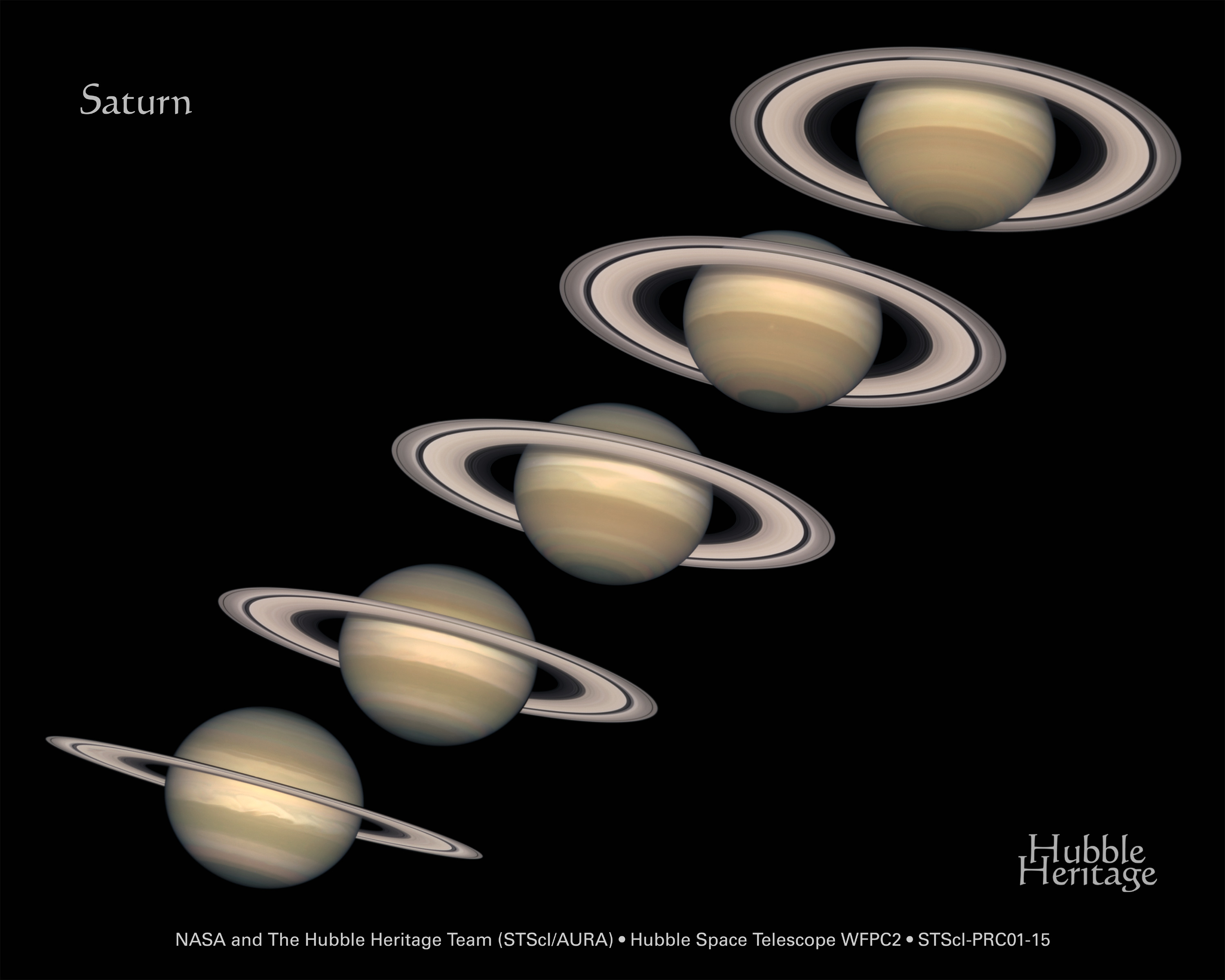
Saturnian Seasons

The Seasons of Saturn
Image Credit: R. G. French (Wellesley College) et al., NASA, ESA, and The Hubble Heritage Team (STScI/AURA)
From APOD:

"Explanation: Since Saturn's axis is tilted as it orbits the Sun, Saturn has seasons, like those of planet Earth ... but Saturn's seasons last for over seven years. So what season is it on Saturn now? Orbiting the equator, the tilt of the rings of Saturn provides quite a graphic seasonal display. Each year until 2016, Saturn's rings will be increasingly apparent after appearing nearly edge-on in 2009. The ringed planet is also well placed in evening skies providing a grand view as summer comes to Saturn's northern hemisphere and winter to the south. The Hubble Space Telescope took the above sequence of images about a year apart, starting on the left in 1996 and ending on the right in 2000. Although they look solid, Saturn's Rings are likely less than 50 meters thick and consist of individually orbiting bits of ice and rock ranging in size from grains of sand to barn-sized boulders."

Thursday, July 25, 2013

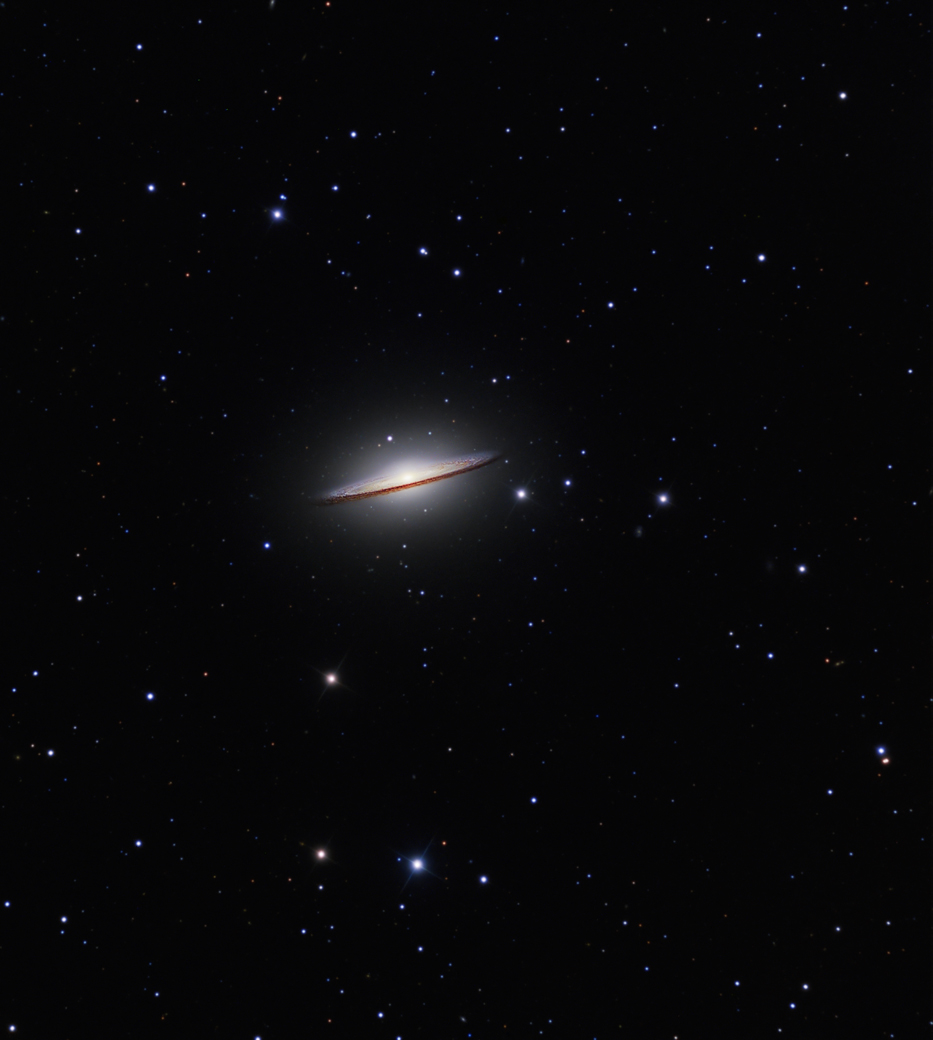
Another Gorgeous Galaxy - the Sombrero

sombrero galaxy
The Sombrero Galaxy from Hale
Image Credit & Copyright: Caltech/Palomar Observatory/Paul Gardner, Salvatore Grasso, and Ryan Hannahoe
From APOD:

"Explanation: What's going on in the center of this spiral galaxy? Named the Sombrero Galaxy for its hat-like resemblance, M104 features a prominent dust lane and a bright halo of stars and globular clusters. Reasons for the Sombrero's hat-like appearance include an unusually large and extended central bulge of stars, and dark prominent dust lanes that appear in a disk that we see nearly edge-on. Billions of old stars cause the diffuse glow of the extended central bulge visible in the above image from the 200-inch Hale Telescope. Close inspection of the central bulge shows many points of light that are actually globular clusters. M104's spectacular dust rings harbor many younger and brighter stars, and show intricate details astronomers don't yet fully understand. The very center of the Sombrero glows across the electromagnetic spectrum, and is thought to house a large black hole. Fifty million-year-old light from the Sombrero Galaxy can be seen with a small telescope towards the constellation of Virgo."
 
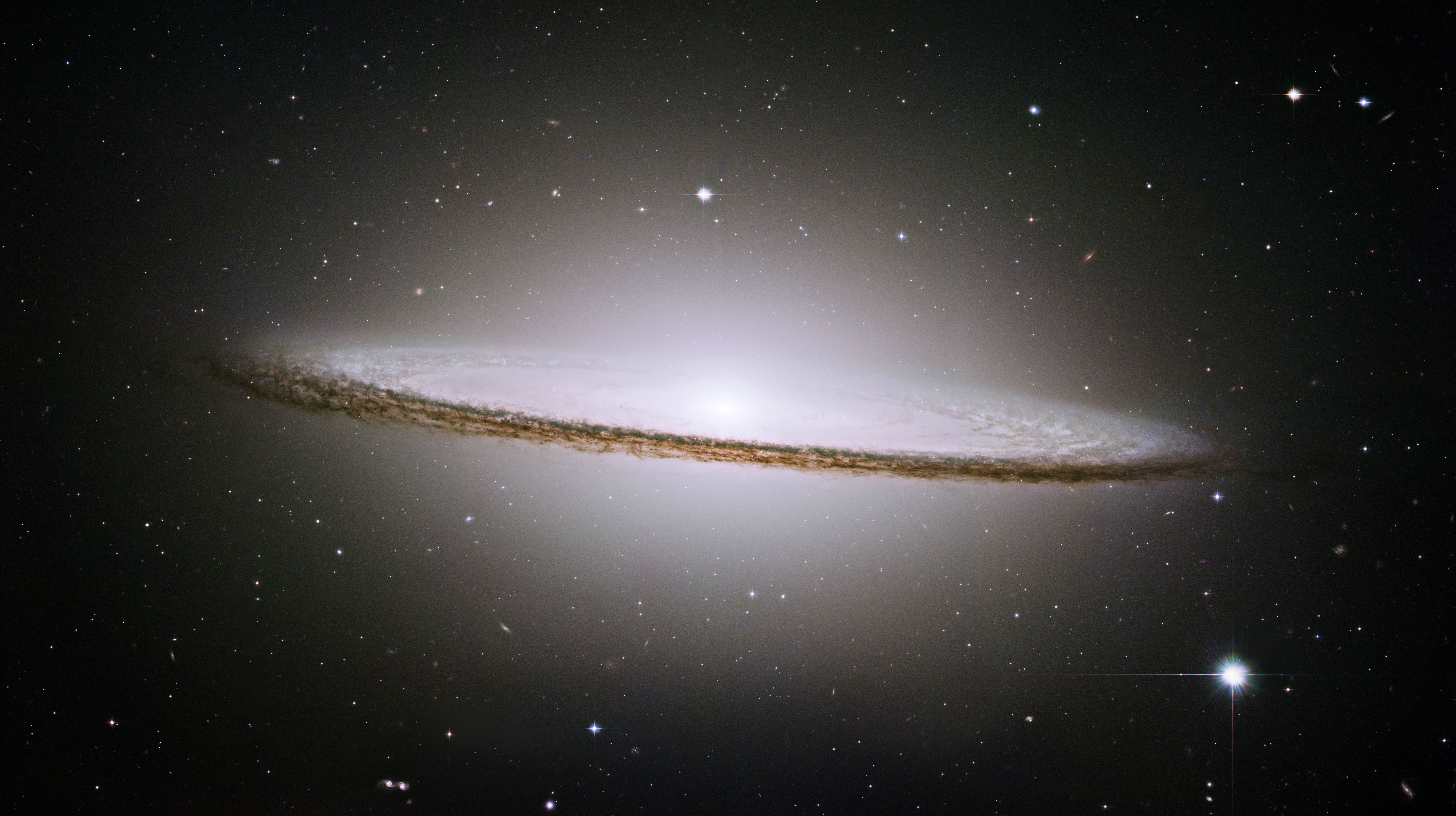
A nice close-up below taken earlier by the Hubble Telescope:
 
sombrero galaxy
The Sombrero Galaxy from Hubble
Credit: NASA, ESA, and the Hubble Heritage Team (STScI / AURA)
 

Tuesday, July 23, 2013

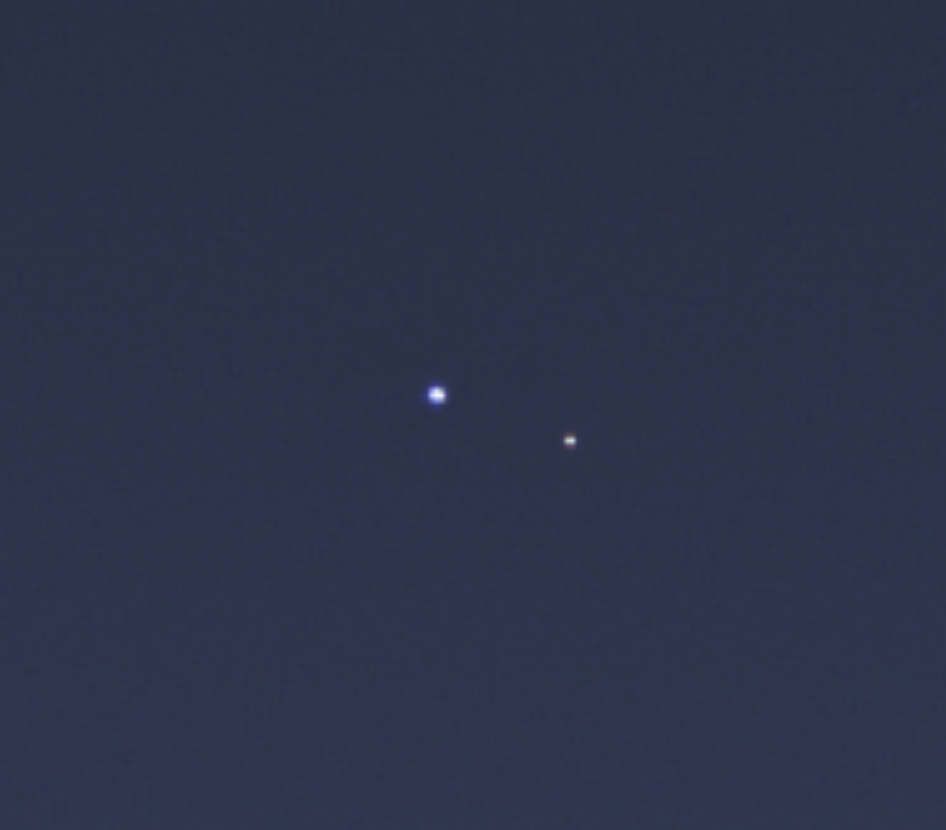
The View from Saturn: Our Own Pale Blue Dot and Dusty Moon

earth and moon from saturn
Earth and Moon from Saturn
Image Credit: NASA/JPL-Caltech/Space Science Institute
From APOD:

"Explanation: You are here. Everyone you've ever known is here. Every human who has ever lived -- is here. Pictured above is the Earth-Moon system as captured by the Cassini mission orbiting Saturn in the outer Solar System. Earth is the brighter and bluer of the two spots near the center, while the Moon is visible to its lower right. Images of Earth from Saturn were taken on Friday. Quickly released unprocessed images were released Saturday showing several streaks that are not stars but rather cosmic rays that struck the digital camera while it was taking the image. The above processed image was released earlier today. At nearly the same time, many humans on Earth were snapping their own pictures of Saturn."

Saturday, July 13, 2013

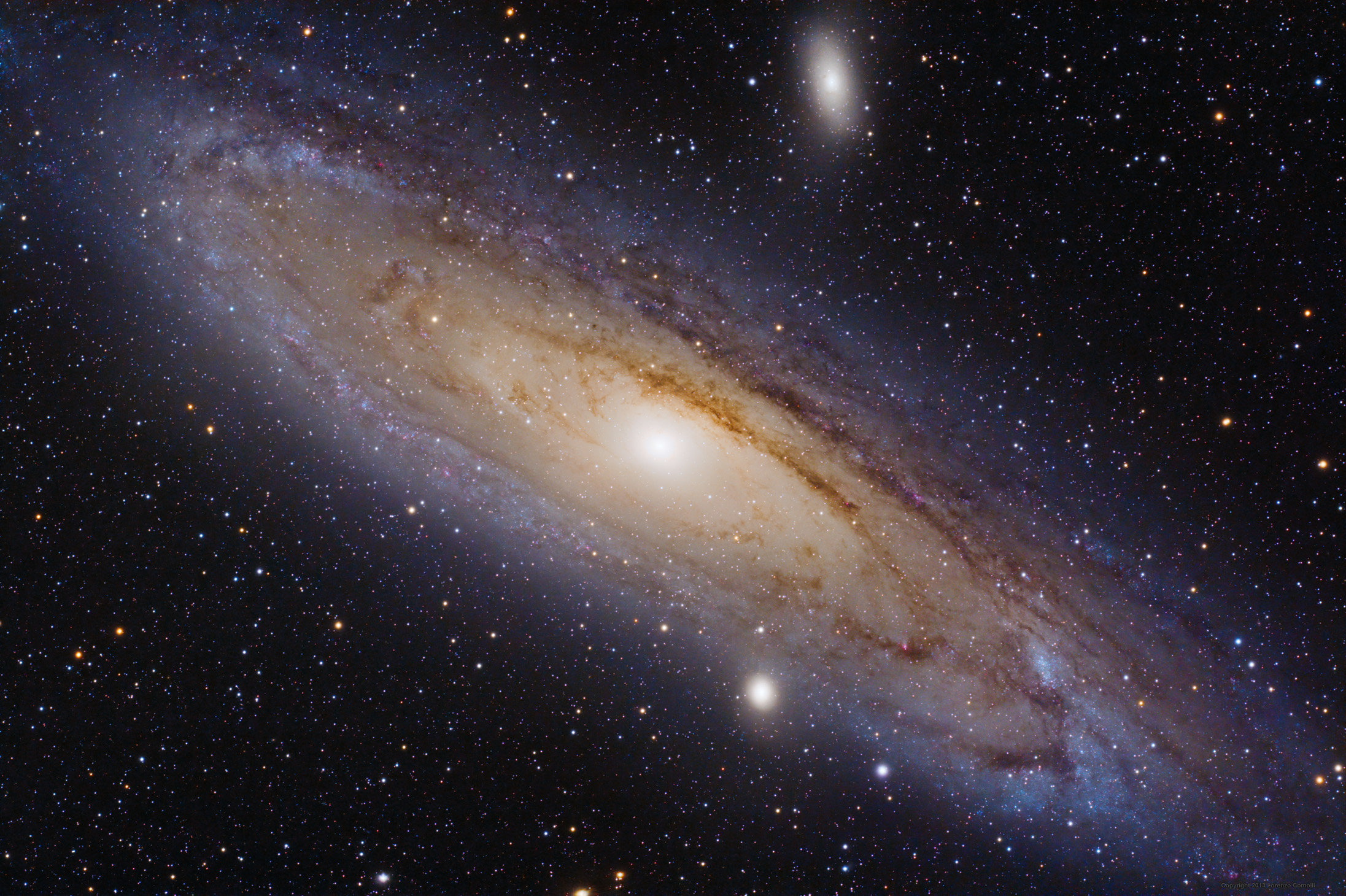
Our Sister Galaxy, Andromeda, the Fairest One of All

M31: The Andromeda Galaxy
Image Credit & Copyright: Lorenzo Comolli
From APOD:

"Explanation: Andromeda is the nearest major galaxy to our own Milky Way Galaxy. Our Galaxy is thought to look much like Andromeda. Together these two galaxies dominate the Local Group of galaxies. The diffuse light from Andromeda is caused by the hundreds of billions of stars that compose it. The several distinct stars that surround Andromeda's image are actually stars in our Galaxy that are well in front of the background object. Andromeda is frequently referred to as M31 since it is the 31st object on Messier's list of diffuse sky objects. M31 is so distant it takes about two million years for light to reach us from there. Although visible without aid, the above image of M31 was taken with a small telescope. Much about M31 remains unknown, including how it acquired its unusual double-peaked center."

Saturday, July 6, 2013

When Galaxies Collide

NASA illustration galaxy collision
NASA illustration
What a thought! In about four billion years, our Milky Way and our neighboring Andromeda Galaxy (M31) will collide and merge to form a strange new galaxy. At least according to measurements that the Hubble Space Telescope has gathered on the motion of the Andromeda Galaxy. I guess we shouldn't lose any sleep over this, but it is interesting to think what fate might await our area of the Universe.

Saturday, June 15, 2013

Totally Mercury

All of Mercury

From APOD:

Explanation: For the first time, the entire surface of planet Mercury has been mapped. Detailed observations of the innermost planet's surprising crust have been ongoing since the robotic MESSENGER spacecraft first passed Mercury in 2008 and began orbiting in 2011. Previously, much of the Mercury's surface was unknown as it is too far for Earth-bound telescopes to see clearly, while the Mariner 10 flybys in the 1970s observed only about half. The above video is a compilation of thousands of images of Mercury rendered in exaggerated colors to better contrast different surface features. Visible on the rotating world are rays emanating from a northern impact that stretch across much of the planet, while about half-way through the video the light colored Caloris Basin rotates into view, a northern ancient impact feature that filled with lava. MESSENGER has now successfully completed its primary and first extended missions. 

Friday, June 7, 2013

APOD - Fabulous Video on the Scale of Stars

Star Size Comparisons
Video Credit & Copyright: morn1415 (YouTube)
 
From APOD:
 
"Explanation: How big is our Sun compared to other stars? In a dramatic and popular video featured on YouTube, the relative sizes of planets and stars are shown from smallest to largest. The above video starts with Earth's Moon and progresses through increasingly larger planets in our Solar System. Next, the Sun is shown along as compared to many of the brighter stars in our neighborhood of the Milky Way Galaxy. Finally, some of the largest stars known spin into view. Note that the true sizes of most stars outside of the Sun and Betelgeuse are not known by direct observation, but rather inferred by measurements of their perceived brightness, temperature, and distance. Although an inspiring learning tool that is mostly accurate, APOD readers are encouraged to complete the learning experience -- and possibly help make future versions more accurate -- by pointing out slight inaccuracies in the video."


Thursday, June 6, 2013

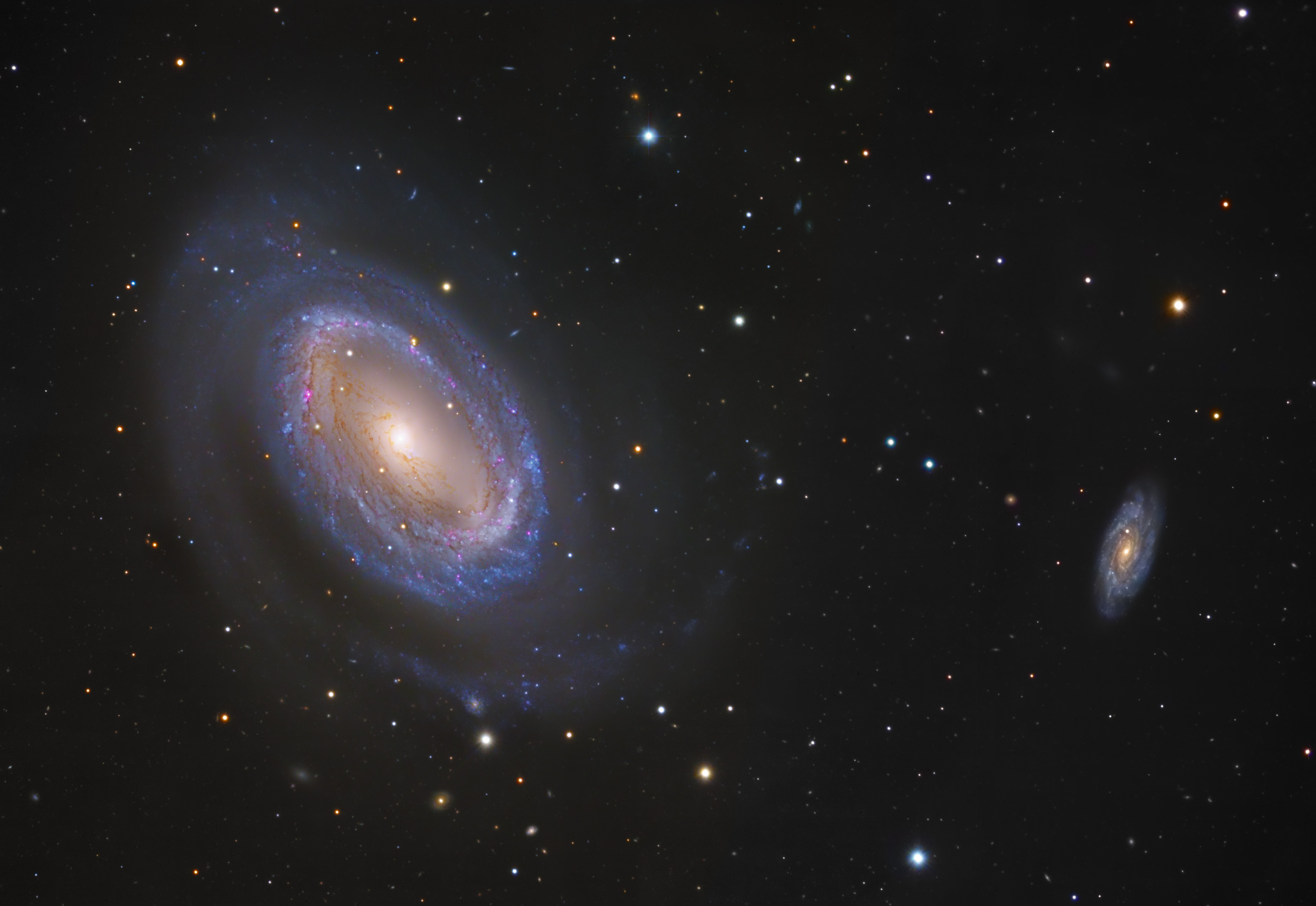
One-Armed Spiral Galaxy NGC 4725

One Armed Spiral Galaxy NGC 4725
One-Armed Spiral Galaxy NGC 4725
Image Data: Subaru Telescope (NAOJ), Hubble Space Telescope,
Additional Color data: Adam Block, Bob Franke, Maurice Toet - Assembly and Processing: Robert Gendler
Not all galaxies are formed in the typical pinwheel or whirlpool shapes. There are some peculiar galaxies with unusual structures, documented in Wikipedia. And one-armed galaxies are also unusual, as APOD explains below.

"While most spiral galaxies, including our own Milky Way, have two or more spiral arms, NGC 4725 has only one. In this sharp color composite image, the solo spira mirabilis seems to wind from a prominent ring of bluish, newborn star clusters and red tinted star forming regions. The odd galaxy also sports obscuring dust lanes a yellowish central bar structure composed of an older population of stars. NGC 4725 is over 100 thousand light-years across and lies 41 million light-years away in the well-groomed constellation Coma Berenices. Computer simulations of the formation of single spiral arms suggest that they can be either leading or trailing arms with respect to a galaxy's overall rotation. Also included in the frame, a more traditional looking spiral appears as a smaller background galaxy."

Friday, May 24, 2013

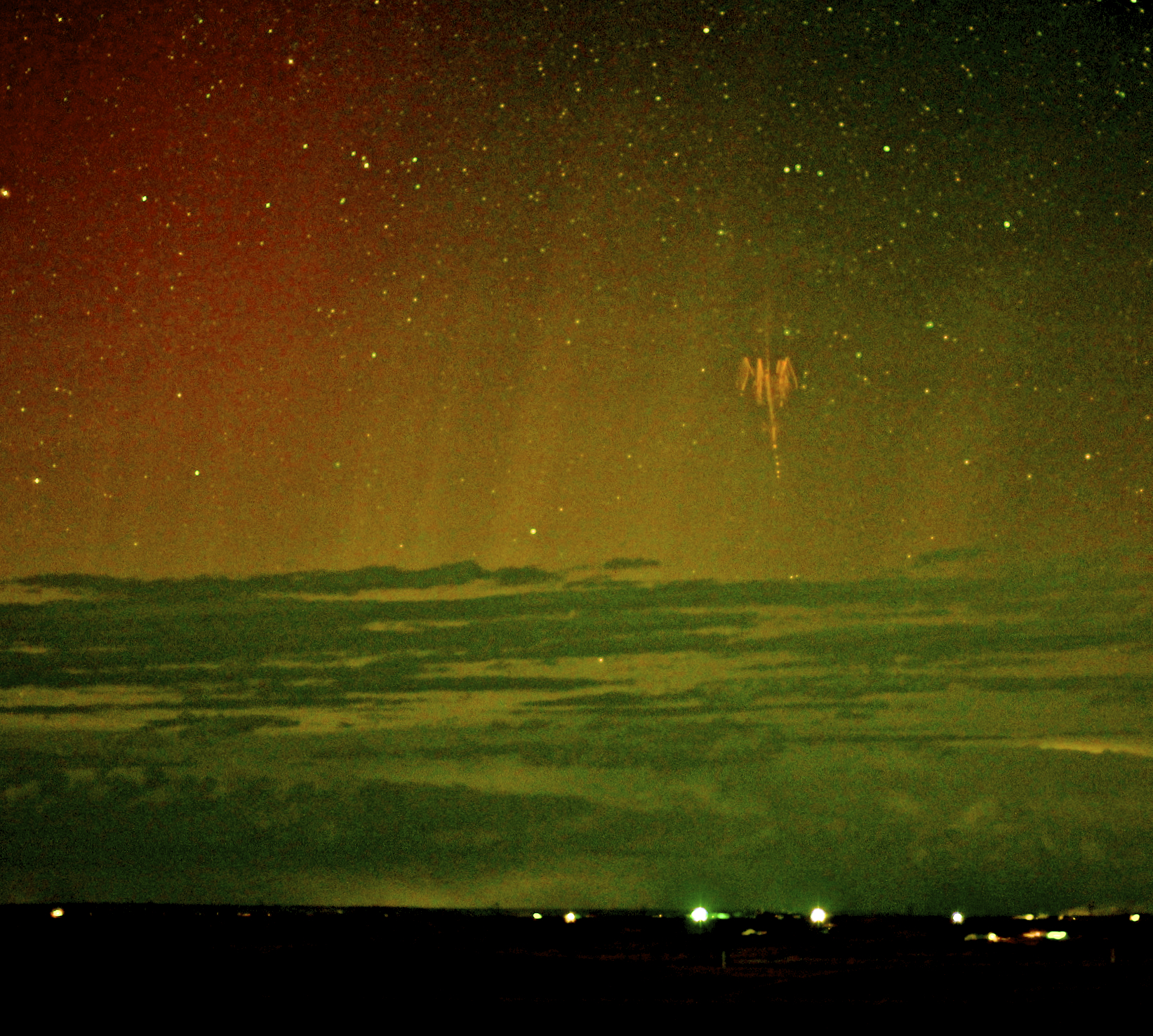
APOD - Red Sprite Lightning

Red Sprite Lightning with Aurora
Image Credit & Copyright:
Walter Lyons (FMA Research), WeatherVideoHD.TV
From APOD: "What's that in the sky? It is a rarely seen form of lightning confirmed only about 25 years ago: a red sprite. Recent research has shown that following a powerful positive cloud-to-ground lightning strike, red sprites may start as 100-meter balls of ionized air that shoot down from about 80-km high at 10 percent the speed of light and are quickly followed by a group of upward streaking ionized balls. The above image, taken a few days ago above central South Dakota, USA, captured a bright red sprite, and is a candidate for the first color image ever recorded of a sprite and aurora together. Distant storm clouds cross the bottom of the image, while streaks of colorful aurora are visible in the background. Red sprites take only a fraction of a second to occur and are best seen when powerful thunderstorms are visible from the side."

Monday, May 20, 2013

APOD - Odd Feature Looks Out of This World

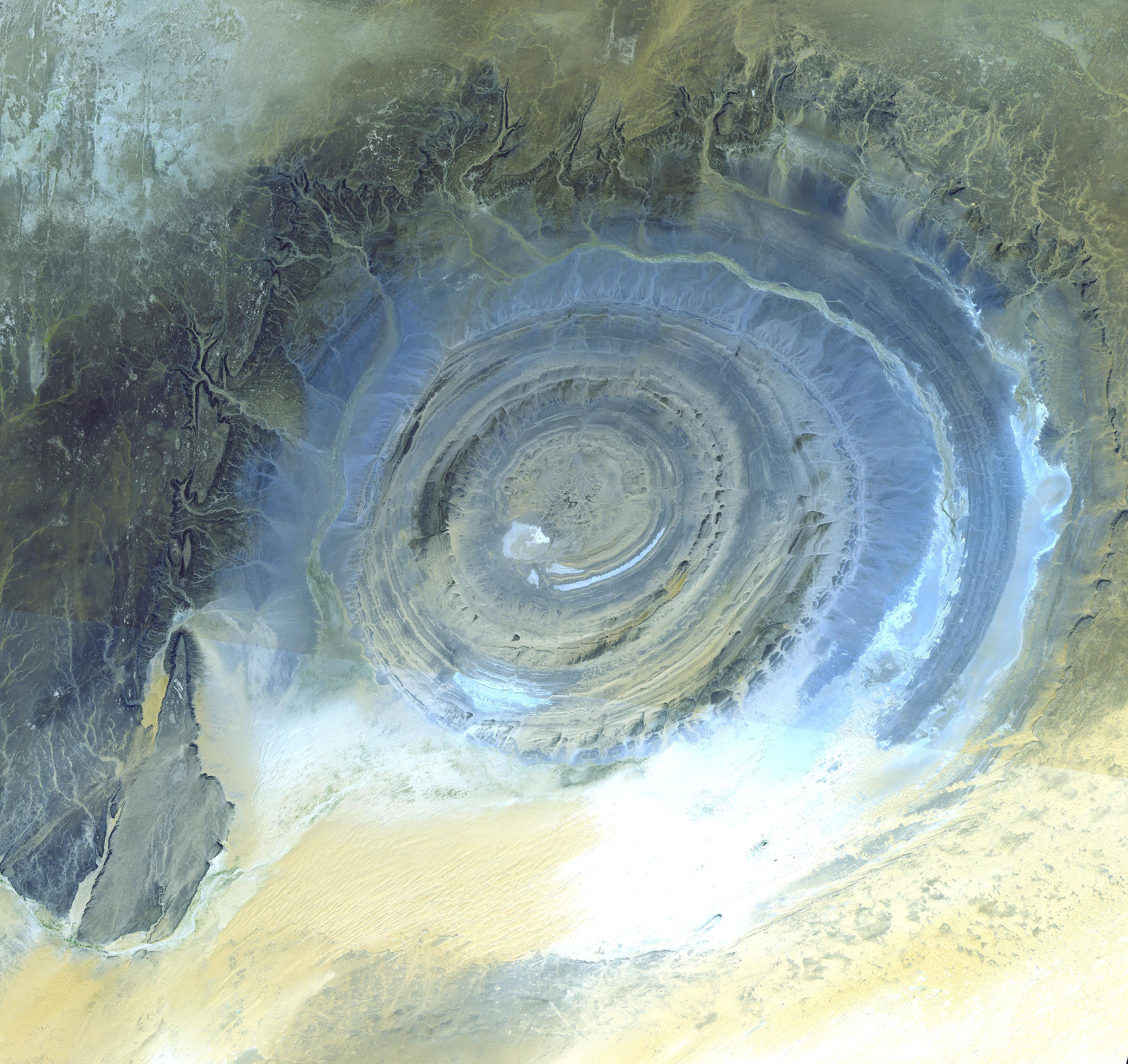
Earth Richat Structure
Earth's Richat Structure
Image Credit: NASA/GSFC/METI/Japan Space Systems, and U.S./Japan ASTER Science Team
But it's actually located on Earth! It looks almost like a giant blue eye fixated outward at the sky, but this geological structure may have been caused by massive erosion. NASA's APOD has a partial explanation for it:

"What on Earth is that? The Richat Structure in the Sahara Desert of Mauritania is easily visible from space because it is nearly 50 kilometers across. Once thought to be an impact crater, the Richat Structure's flat middle and lack of shock-altered rock indicates otherwise. The possibility that the Richat Structure was formed by a volcanic eruption also seems improbable because of the lack of a dome of igneous or volcanic rock. Rather, the layered sedimentary rock of the Richat structure is now thought by many to have been caused by uplifted rock sculpted by erosion. The above image was captured by the ASTER instruments onboard the orbiting orbiting Terra satellite. Why the Richat Structure is nearly circular remains a mystery."

Tuesday, May 14, 2013

Fantastic Cover of David Bowie's Space Oddity from Space


Canadian astronaut Chris Hadfield sang and recorded Space Oddity from the International Space Station (ISS) and the result is pretty darn good! Bowie himself has given this version his stamp of approval on his FB page. It is quite moving to hear the song come to life literally and we're here to see it - a wonderful gift.

Friday, May 10, 2013

The Unusual Red Rectangle Nebula

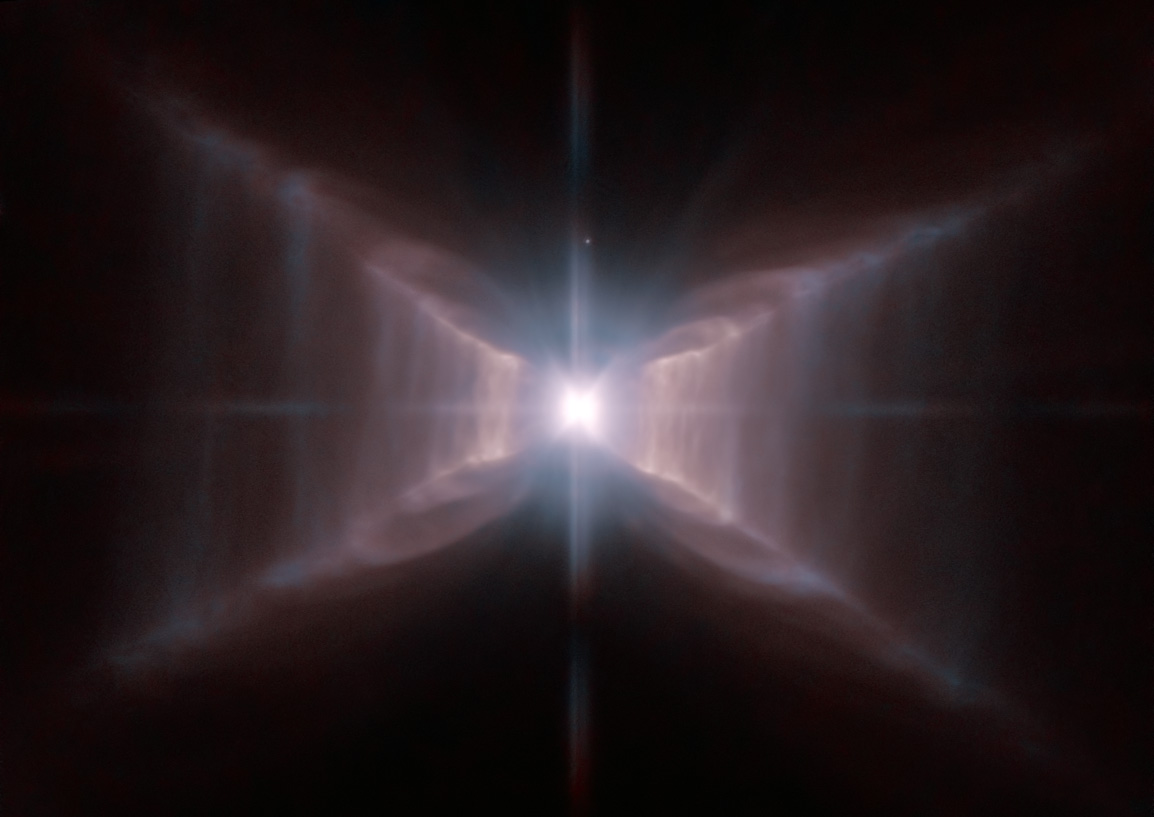
Red Rectangle Nebula
The Red Rectangle Nebula from Hubble
Credit: ESA, Hubble, NASA
The amazing Red Rectangle Nebula is difficult to observe from ground-based telescopes, which is why it wasn't discovered until 1973. It looks like a glittering emerald or princess cut jewel and the Hubble Telescope has given us more detailed views which has helped astronomers learn more about it.  Here's the APOD story about why it looks like this:

"How was the unusual Red Rectangle nebula created? At the nebula's center is an aging binary star system that surely powers the nebula but does not, as yet, explain its colors. The unusual shape of the Red Rectangle is likely due to a thick dust torus which pinches the otherwise spherical outflow into tip-touching cone shapes. Because we view the torus edge-on, the boundary edges of the cone shapes seem to form an X. The distinct rungs suggest the outflow occurs in fits and starts. The unusual colors of the nebula are less well understood, however, and current speculation holds that they are partly provided by hydrocarbon molecules that may actually be building blocks for organic life. The Red Rectangle nebula lies about 2,300 light years away towards the constellation of the Unicorn (Monoceros). The nebula is shown above in unprecedented detail as captured recently by the Hubble Space Telescope. In a few million years, as one of the central stars becomes further depleted of nuclear fuel, the Red Rectangle nebula will likely bloom into a planetary nebula."

Thursday, April 25, 2013

Stunning New Images from Hubble

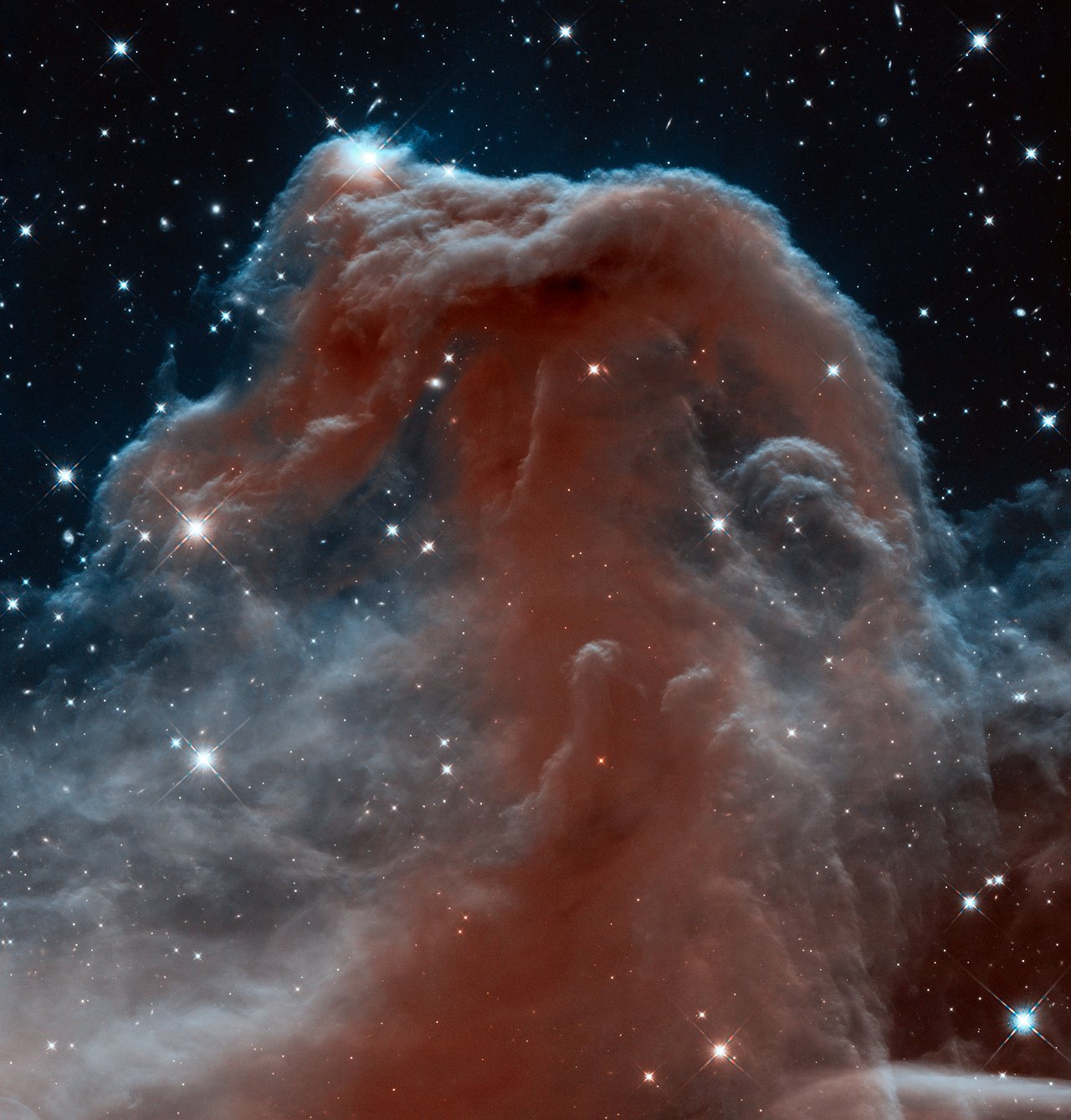
New infrared view of the Horsehead Nebula  Hubbles 23rd Anniversary Image
New infrared view of the Horsehead Nebula - Hubble's 23rd Anniversary Image -
Image credit: NASA, ESA, and the Hubble Heritage Team (STScI/AURA)
 
The Hubble Space Telescope (HST) is 23 years old and in celebration it has sent us some truly beautiful new images, especially of the Horsehead Nebula in the Orion constellation. The new image is notable for its amazing clarity and shows in great detail the structures of the nebula which were previously obscured by stellar dust. The Horsehead Nebula is one of the most recognizable celestial features and the Hubble has revealed its beauty in a whole new light. 
 
 
Infrared and visible views of the Horsehead Nebula
 Infrared and visible views of the Horsehead Nebula.
Image credit: NASA, ESA, and the Hubble Heritage Team (STScI/AURA)

Tuesday, April 16, 2013

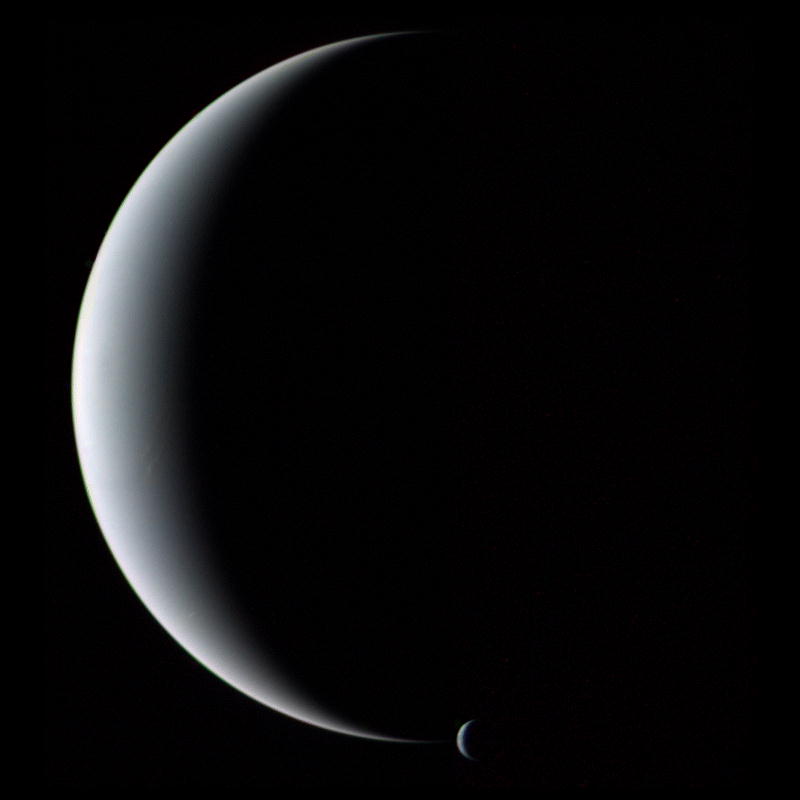
Family Portrait, Crescent Neptune and Triton - APOD

Crescent Neptune and Triton - Image Credit: Voyager 2, NASA
This is a stunning photo composition by Voyager 2, taken back in 1989, when both planet and moon were in 
crescent phase. Neptune is somewhat washed out in appearance, lacking its familiar blue hue, as the sunlight is scattered forward. The APOD page has more details about how this image was possible.

Friday, March 22, 2013

APOD - Light Echoes

Light Echoes from V838 Mon
Light Echoes from V838 Mon - APOD
Image Credit:
NASA, ESA, H. E. Bond (STScI)
A light echo is the visual analog of a sound echo and the Hubble image above shows the apparent brilliant burst of light from V838 Monocerotis, a red variable star in the constellation Monoceros (Greek for Unicorn). This star exploded for uncertain reasons, but the magnitude of the light burst is due to light reflected by the more distant rings of interstellar dust already surrounding the star. Because of these light echoes, the rate of expansion of this explosion appeared to be superluminal (faster than the speed of light). The rapid expansion can be viewed in the image below. A sound echo is something we instinctively understand, but picturing light echoes is another thing altogether, since we don't experience it in our lives.  The starburst in Monoceros, observed in 2002, is a beautiful, cottony mass of light, color, and dust - and still a mystery.

progression of light echo in v838 mon
Successive photos of V838 Monocerotis showing the progress of a light echo.

Wednesday, March 13, 2013

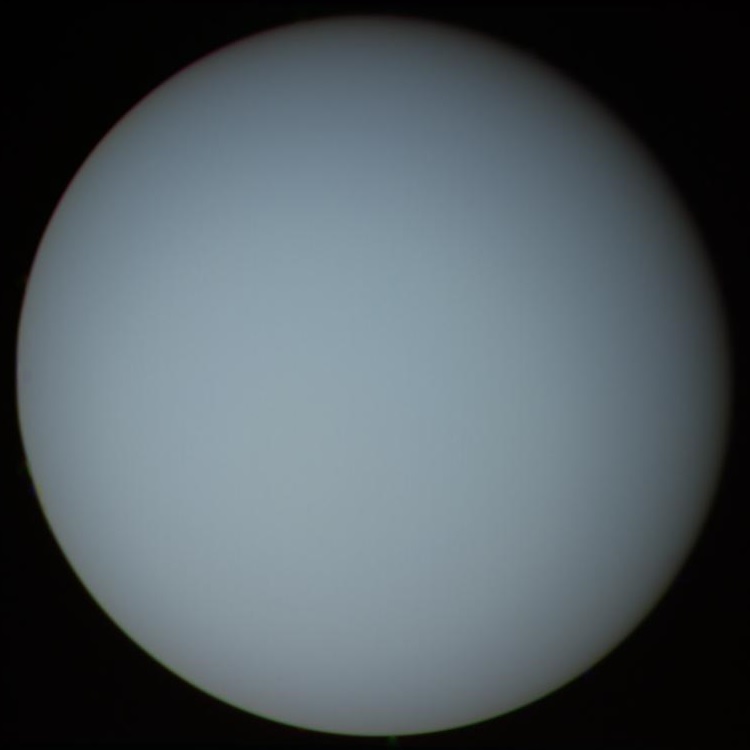
The Planet Uranus, Brought to You by Sir William Herschel

NASA photo of Uranus taken by Voyager 2, Jan. 10, 1986 - public domain, Wikimedia Commons
It's the 232nd anniversary of the discovery of Uranus by Sir William Herschel, who spied it while in his garden on March 13, 1781. The dusky blue planet actually had been observed previously as early as 1690, but it was always mistaken for a star. Herschel ultimately determined it to be a planet, even though he himself initially mistook it for a comet. He was asked to name this planet and he chose Georgium in honor of King George III, but this idea was met with general disfavor outside of Britain. The name Uranus comes from the Greek god who was the father of Jupiter and Saturn. The element Uranium was discovered in 1789 and was named in honor of Uranus. It's interesting that some astromers wanted to call Uranus, Neptune, although the planet Neptune hadn't been discovered yet. (Makes you wonder what Neptune would have been named if Uranus had been given that name?) And now, all kidding aside, let's hear it for Uranus! (Groan!)

Tuesday, March 5, 2013

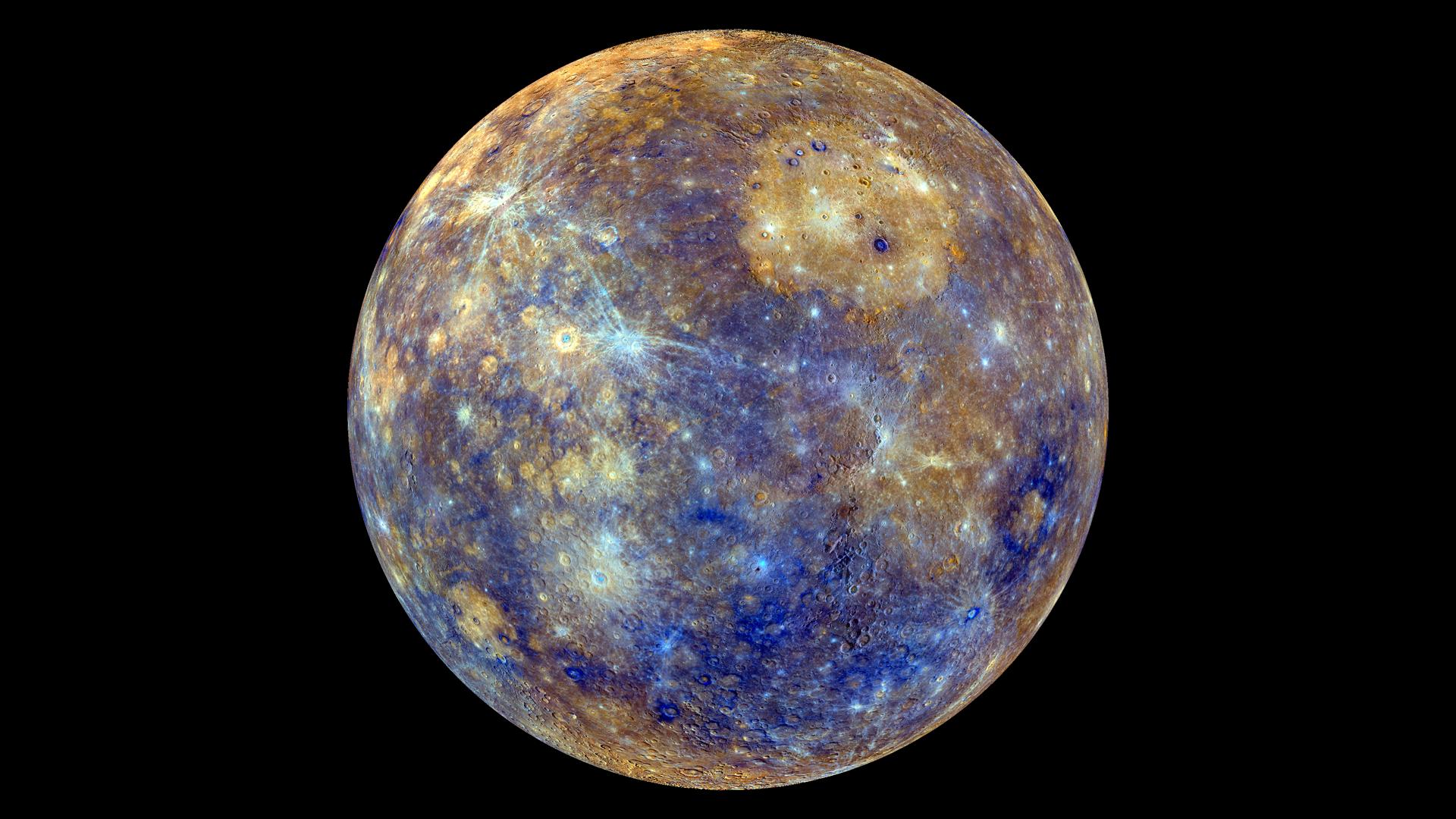
APOD - Magnificent Little Mercury

Colors of Mercury
Image Credit:
NASA / JHU Applied Physics Lab / Carnegie Inst. Washington
Swift little Mercury, not much bigger than our own Moon, though much denser, looks like its twin in this color-enhanced image.